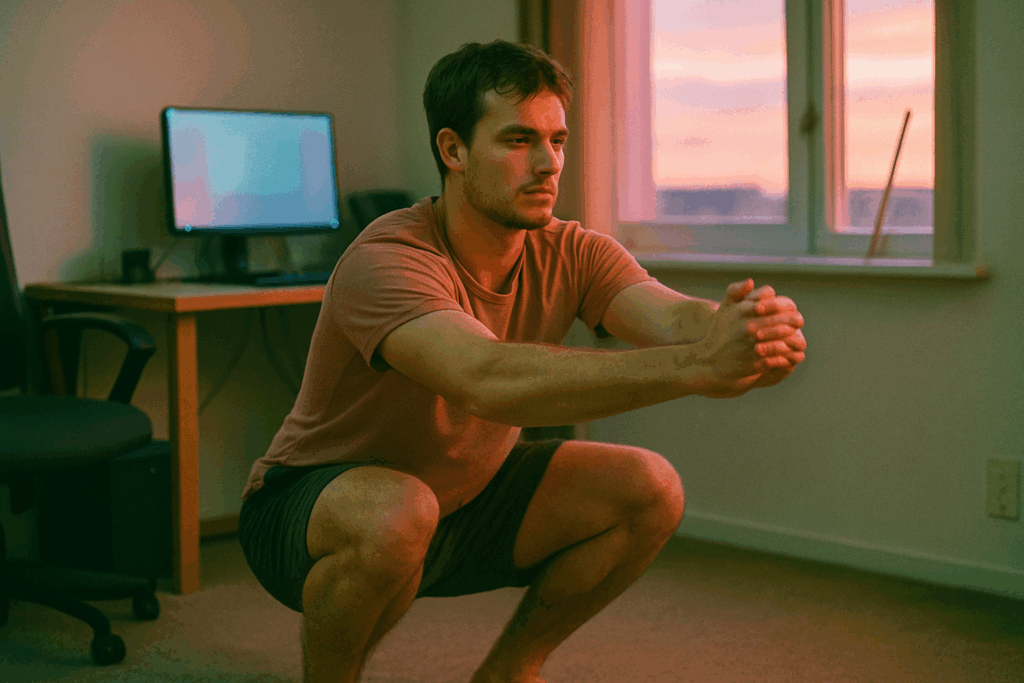
There’s a moment most people recognize: shoulders climbing toward the ears, jaw locked, breath shallow without noticing. Stress lives in the body long before we name it. And the body, it turns out, is often where relief begins.
That’s the quiet logic behind yoga. It isn’t a performance or a flexibility test. At its core, it’s a practice that links breath, movement, and attention in a way that gives the nervous system something it rarely gets during a busy day: a pause it can actually feel.
For adults juggling work demands, training loads, family pressure, or the slow accumulation of small stressors, this matters. Research over the past several years has begun to map what regular practitioners have long described: yoga can shift how the body responds to stress, and over time, how the mind interprets it. A recent systematic review and meta-analysis found that yoga practice produced measurable improvements in stress relief capacity and emotional regulation across diverse adult populations. The effects weren’t dramatic overnight, but they were consistent.
If you’ve been training hard and feeling more wired than recovered, gentle movement may be more useful than pushing through another intense workout. That distinction matters more than most people realize.
What Yoga Actually Is (and Isn’t)
Yoga is often described as exercise, but that framing misses most of it. The traditional definition refers to the integration of physical postures (asana), breath regulation (pranayama), and focused attention or meditation. Modern clinical writing tends to describe it as a mind-body practice that influences both physiological and psychological systems.
It isn’t a religion, a cure, or a substitute for medical care. It’s a structured way of training the body and mind to respond differently to stress.
Some sessions feel athletic. Others feel almost still. Both can be effective, depending on what your nervous system actually needs that day.
How Yoga Affects the Stress Response
When stress hits, the sympathetic nervous system takes over. Heart rate climbs, breathing shortens, muscles brace. That response is useful in short bursts and exhausting when it becomes the default setting.
Yoga interrupts that pattern in a few specific ways:
- Breath regulation. Slow, deliberate breathing activates the parasympathetic nervous system, the body’s “rest and recover” mode. This is one of the most consistent findings in the literature.
- Interoceptive awareness. Practicing attention to internal sensations (a tight hip, a held breath, a clenched jaw) helps the brain notice stress signals earlier, before they escalate.
- Movement with breath. Coordinating motion with inhalation and exhalation creates a rhythm that competes with the scattered, reactive tempo of stress.
A pilot study on yoga techniques for stress and burnout found that even short, structured sessions reduced perceived stress in working adults, with participants reporting improvements in emotional steadiness and sleep quality. The improvements weren’t framed as miraculous. They were framed as accessible.
Emotional Benefits Worth Naming
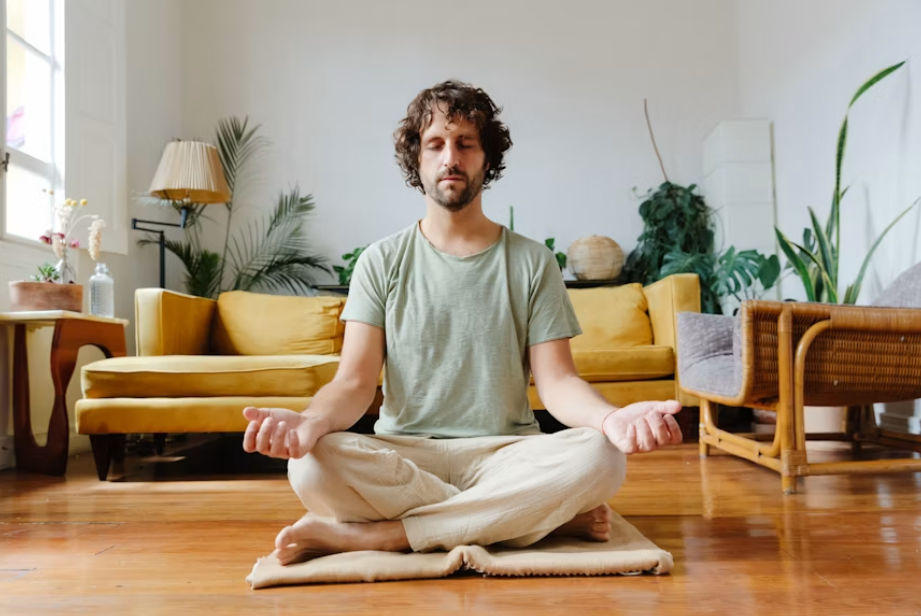
For people dealing with chronic stress, anxiety, or the low-grade emotional fatigue that often goes unnamed, yoga offers a few specific emotional shifts:
- A felt sense of calm that doesn’t require external conditions to change
- Reduced reactivity to small stressors
- Better recognition of emotions before they overwhelm
- Improved sleep, which compounds emotional resilience
- A steadier baseline mood over weeks of regular practice
A qualitative study on tele-yoga in adults living with long-term illness found that participants valued the practice not because it eliminated their challenges, but because it gave them a reliable way to manage emotional load. That’s a more honest framing than promises of transformation.
When Yoga Supports Training and Recovery
For active adults, the picture sharpens. Hard training creates physical stress that the nervous system has to recover from. Layer that on top of work pressure and poor sleep, and the body can shift into a state of chronic overreaching, where workouts stop producing gains and start producing fatigue.
Gentle yoga, used intentionally, can support recovery in ways that complement training:
- Active recovery days. Slow flows and restorative postures encourage circulation without adding training stress.
- Mobility work. Targeted poses can address restrictions that limit performance.
- Downregulation after intense sessions. Breath-led practice helps shift the body out of sympathetic dominance, which supports sleep and tissue repair.
- Awareness of overtraining signals. Practitioners often notice fatigue, irritability, or persistent soreness earlier.
This is where the distinction between normal post-exertion heaviness and warning signs matters. Soreness that fades within a few days, mild fatigue after hard sessions, and brief mood dips are common. Persistent insomnia, resting heart rate elevation, mood changes that don’t lift, or pain that worsens with movement deserve attention from a clinician, not another workout. Yoga isn’t a workaround for symptoms that need evaluation.
Starting a Practice Without Overcomplicating It
People often delay starting because they assume they need flexibility, equipment, or a studio membership. None of that is required.
A workable starting point looks like this:
- Frequency: Two to three sessions per week is enough to notice changes within a month or two.
- Length: Twenty to thirty minutes is plenty. Shorter sessions count.
- Style: For stress relief, gentler styles (hatha, yin, restorative, slow vinyasa) tend to work better than fast, heated formats.
- Breath focus: If you do nothing else, slow your exhale. A longer exhale than inhale reliably calms the nervous system.
- Environment: A quiet corner, a mat or towel, and a few minutes without interruption.
Research on older adults found that even modest yoga programs improved well-being measures compared to light exercise alone, suggesting the additive value comes from the breath and attention components, not just the movement.
Where Evidence Is Strong, and Where It’s Still Building
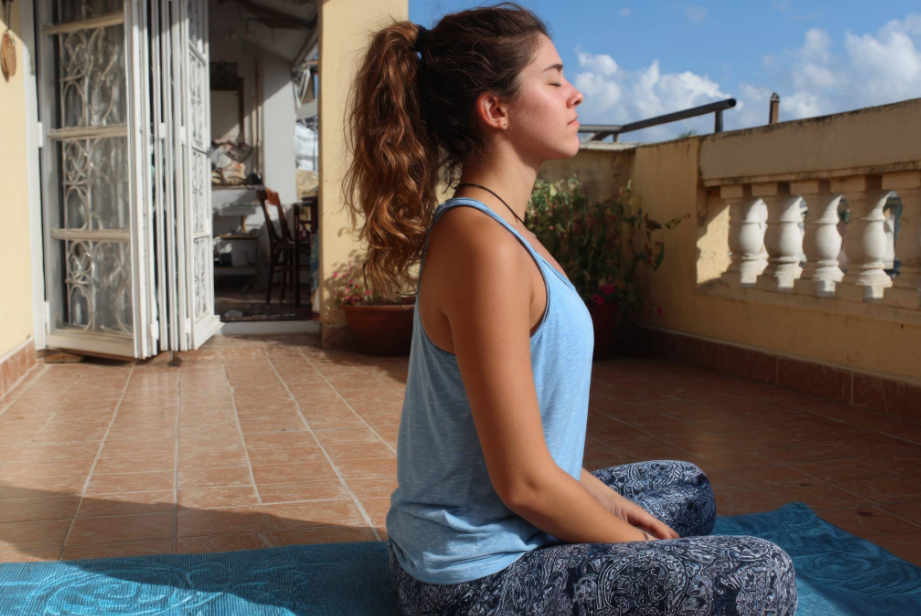
It’s worth being honest about the research. Yoga has strong evidence as a supportive practice for stress, mood, sleep, and general well-being. It has growing evidence in specific clinical contexts, including pregnancy-related mood and physical changes and as part of multi-component approaches to migraine management.
It is not a treatment for serious mental health conditions on its own. It is not a substitute for therapy, medication, or medical care when those are needed. The strongest framing in the literature describes yoga as an integrative practice, useful alongside other forms of care, not in place of them.
That honesty is part of why the practice tends to stick. It doesn’t promise more than it delivers.
What Tends to Change Over Time
People who maintain a regular practice often describe a slow, accumulating shift. Stress still happens. Hard days still happen. But the recovery time shortens. The reactivity softens. The body becomes a place that offers information rather than a source of constant tension.
That’s the realistic version of what yoga offers: not the absence of stress, but a steadier relationship with it.
If you’re starting from a place of burnout, persistent low mood, or anxiety that interferes with daily life, build a practice around support rather than self-improvement. Talk to a healthcare provider about what you’re experiencing. Use yoga as one of several tools, not as the whole plan.
The body keeps showing up. A practice that meets it gently, consistently, with attention to breath and signal, tends to give back more than the time it takes.
****
Safety Disclaimer
If you or someone you love is in crisis, call 911 or go to the nearest emergency room. You can also call or text 988, or chat via 988lifeline.org to reach the Suicide & Crisis Lifeline. Support is free, confidential, and available 24/7.
Author Bio
Earl Wagner is a health content strategist focused on behavioural systems, clinical communication, and data-informed healthcare education.
Sources
- Anita Choudhary. (2019). Effect of Yoga versus Light Exercise to Improve Well-Being and Promote Healthy Aging among Older Adults in Central India: A Study Protocol for a Randomized Controlled Trial. Geriatrics (Basel, Switzerland). https://doi.org/10.3390/geriatrics4040064
- Towe Hedbom. (2023). Expectations of Tele-Yoga in Persons With Long-Term Illness: Qualitative Content Analysis. Journal of medical Internet research. https://doi.org/10.2196/36808
- Ian-Ju Liang. (2024). The wonders of mind-body practices during pregnancy: A topical review. Taiwanese journal of obstetrics & gynecology. https://doi.org/10.1016/j.tjog.2024.04.007
- Xiaokun Mu. (2026). The effects of yoga exercise on stress relief capacity and emotional changes: a systematic review and meta-analysis. Frontiers in psychology. https://doi.org/10.3389/fpsyg.2026.1707131
- Gouranga Santra. (2022). Yoga and the Need of Its Integration in Modern Medicine. The Journal of the Association of Physicians of India. https://pubmed.ncbi.nlm.nih.gov/37355975/
- Agnieszka Zok. (2024). Reduce stress and the risk of burnout by using yoga techniques. Pilot study. Frontiers in public health. https://doi.org/10.3389/fpubh.2024.1370399
- Vineeta Singh. (2026). Non-pharmacological approaches for migraine management: a mini-review. Frontiers in pain research (Lausanne, Switzerland). https://doi.org/10.3389/fpain.2026.1760756

 There is a specific skill involved in explaining something clearly — one that is completely separate from actually knowing the subject. Jones Dukensic has both. They has spent years working with health and wellness updates in a hands-on capacity, and an equal amount of time figuring out how to translate that experience into writing that people with different backgrounds can actually absorb and use.
Jones tends to approach complex subjects — Health and Wellness Updates, Nutrition and Diet Plans, Exercise Techniques and Guides being good examples — by starting with what the reader already knows, then building outward from there rather than dropping them in the deep end. It sounds like a small thing. In practice it makes a significant difference in whether someone finishes the article or abandons it halfway through. They is also good at knowing when to stop — a surprisingly underrated skill. Some writers bury useful information under so many caveats and qualifications that the point disappears. Jones knows where the point is and gets there without too many detours.
The practical effect of all this is that people who read Jones's work tend to come away actually capable of doing something with it. Not just vaguely informed — actually capable. For a writer working in health and wellness updates, that is probably the best possible outcome, and it's the standard Jones holds they's own work to.
There is a specific skill involved in explaining something clearly — one that is completely separate from actually knowing the subject. Jones Dukensic has both. They has spent years working with health and wellness updates in a hands-on capacity, and an equal amount of time figuring out how to translate that experience into writing that people with different backgrounds can actually absorb and use.
Jones tends to approach complex subjects — Health and Wellness Updates, Nutrition and Diet Plans, Exercise Techniques and Guides being good examples — by starting with what the reader already knows, then building outward from there rather than dropping them in the deep end. It sounds like a small thing. In practice it makes a significant difference in whether someone finishes the article or abandons it halfway through. They is also good at knowing when to stop — a surprisingly underrated skill. Some writers bury useful information under so many caveats and qualifications that the point disappears. Jones knows where the point is and gets there without too many detours.
The practical effect of all this is that people who read Jones's work tend to come away actually capable of doing something with it. Not just vaguely informed — actually capable. For a writer working in health and wellness updates, that is probably the best possible outcome, and it's the standard Jones holds they's own work to.