
Nursing was supposed to be rewarding. And for most nurses, it is – for a while. Then the mandatory overtime kicks in. The scheduling has no flexibility. The unit politics grind you down. According to AMN Healthcare’s 2025 Survey of Registered Nurses, which polled over 12,000 respondents, 58% of nurses say they feel burned out most days. That’s not a niche problem. That’s a profession in crisis.
PRN nursing doesn’t get talked about enough as a real solution. Most nurses think of it as a bridge – something you do between full-time jobs or when you need extra cash. That assumption is wrong, and it’s costing a lot of nurses the career flexibility they’d actually want if they knew what was possible.
Here are 10 reasons PRN nursing deserves a serious look – whether you’re burned out, bored, or just ready for something different.
1. You get to choose when you work
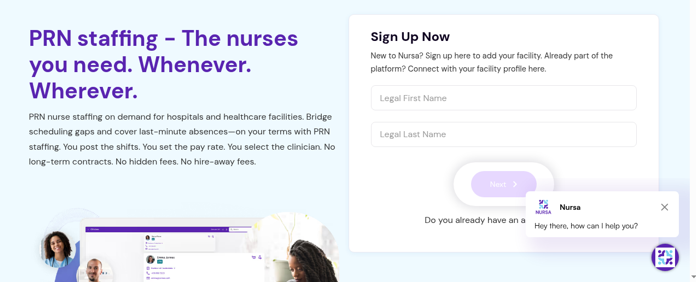
Nursa website
Source: Nursa Nursa connects PRN nurses directly with healthcare facilities, removing the middleman and giving nurses more control over shift selection and pay
PRN stands for “pro re nata” – a Latin phrase meaning “as the situation demands.” In practice, it means you pick your shifts. You accept what works for your schedule and pass on what doesn’t. No manager assigning you a rotation three months out. No guilt trip when you need a Tuesday off.
That kind of scheduling autonomy is what most nurses say they want. The same AMN Healthcare 2025 survey found that 81% of nurses say flexible scheduling would significantly improve their work-life balance. The technology side of this has also matured. Today’s prn staffing platforms let nurses browse open shifts at nearby facilities, apply with a tap, and get confirmed – often within hours. It’s closer to booking a rideshare than submitting a formal job application.
This isn’t just about convenience. Scheduling control is one of the most consistent predictors of job satisfaction in healthcare. When you own your calendar, the relationship with work changes entirely.
2. Higher hourly pay without the full-time grind

PRN nurses typically earn $36.47 per hour on average – with top earners in high-demand specialties clearing $106,000 annually
The pay math on PRN nursing surprises most people. PRN nurses earn an average of $36.47 per hour, with top earners in high-demand specialties – think ICU, OR, and labor and delivery – bringing in up to $106,000 annually, according to 2025 staffing data. That’s without a benefits package pulling down your effective take-home rate.
The honest tradeoff is that PRN comes without employer-sponsored health insurance, paid time off, or retirement contributions. You have to plan for that gap, and the nurses who struggle in PRN roles often underestimate it. The ones who thrive build an income buffer during high-demand periods – holidays, flu season, summer travel peaks – and treat benefits as a line item they fund themselves.
If you’re organized about your finances, the hourly premium more than compensates.
3. You can sidestep the burnout cycle
Most burnout in nursing isn’t about the patients. It’s about the loss of control. You can’t leave when you’re depleted. You can’t say no to a double shift without social consequences. The job takes whatever it wants from you, and you’re expected to adapt.
PRN flips that dynamic. When you’re running low, you just don’t pick up shifts for a few days. There’s no PTO request, no waiting on approval, no awkward conversation with a charge nurse. You’re a contractor. You decide your availability.
This connects to something the managing energy at work research makes clear – energy management, not time management, is what prevents burnout over the long term. PRN nursing gives you the structural conditions to actually manage your energy, because you’re not locked into a schedule someone else controls.
4. No office politics, no cliques
Every nursing unit has its drama. The senior nurse who’s territorial about the supply closet. The charge nurse who plays favorites on scheduling. The long-running feuds that nobody explains to new hires but everyone expects you to navigate.
PRN nurses step outside that entirely. You’re not there long enough to get pulled in. You’re neutral. People are generally glad you showed up to cover a gap, which makes the interpersonal side of the job much simpler.
There’s something genuinely freeing about walking into a unit, doing excellent clinical work, and leaving without accumulating the emotional weight that comes with permanent team membership. It’s not antisocial – it’s a different kind of professional relationship, one built on competence rather than history.
5. You build a broader skill set faster
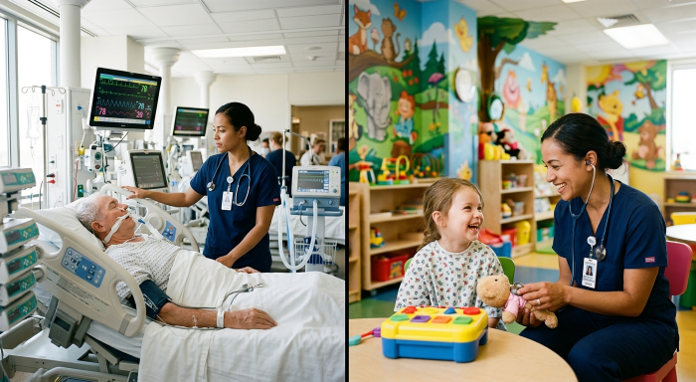
Working across multiple units and facilities accelerates clinical skill development in ways a single department rarely can
A nurse who spends five years on one med-surg unit knows that unit well. A PRN nurse who works ICU, ER, and outpatient in the same year knows something different – how hospitals actually operate, how priorities shift, how protocols vary between facilities.
That breadth is genuinely valuable. Rotating across specialties exposes you to patient populations and clinical scenarios that never appear in a single unit. It keeps the work fresh in a way that prevents the specific type of exhaustion that comes from doing the same tasks in the same environment for years on end.
Hiring managers notice it too. A nurse with PRN experience across multiple service lines brings an adaptability that’s hard to train. It’s a real differentiator if you ever decide to transition back to a staff role – or move into management.
6. The flexibility works both ways – scale up or down
PRN doesn’t lock you into a fixed commitment. You can stack shifts during the months when income matters most, then pull back when you need to recharge, study, travel, or spend time with family. That elasticity is something most full-time roles simply can’t offer.
This aligns with how workplace wellness strategies frame sustainable performance – the goal isn’t maximum output at all times, it’s building a rhythm that works across seasons. PRN nursing is one of the few healthcare career structures that actually allows that rhythm to exist.
It also makes PRN viable for nurses with significant obligations outside of work. Side businesses, graduate school, young children, aging parents – PRN accommodates life in a way that a five-day-a-week hospital schedule rarely does.
7. You expand your professional network across multiple facilities
A staff nurse builds deep relationships at one institution. A PRN nurse builds a wider network across several. After a year or two in PRN work, you might have meaningful professional contacts at four or five facilities – charge nurses, nurse managers, department directors who’ve seen you perform under pressure.
Those contacts matter. They become references for future roles. They’re the people who call you first when a staff position opens on their unit. They can open doors that a single-facility career simply can’t.
Treat every PRN shift as a professional introduction, not just a clock-in. The nurse who communicates clearly, asks the right questions, and stays calm during a difficult shift is remembered. That reputation travels faster in healthcare than in most industries.
8. The demand is real – facilities need you now
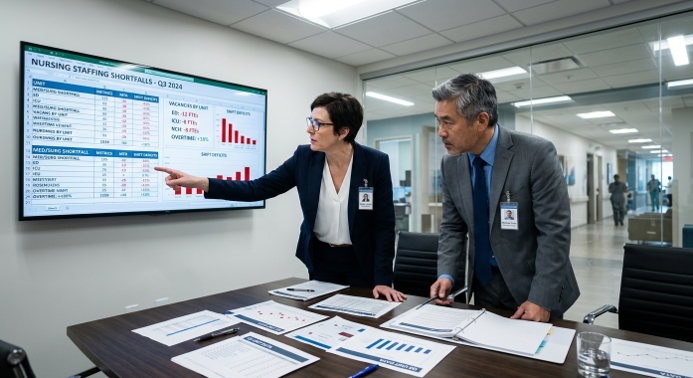
HRSA projects 263,870 unfilled RN positions by 2026, with states like Idaho facing shortages as high as 35%
The nursing shortage isn’t a future concern. It’s happening now, and PRN nurses are one of the primary tools hospitals are using to manage it.
According to Nightingale College citing Health Resources and Services Administration data from December 2025, HRSA projects 263,870 unfilled RN positions by 2026 – an 8% registered nurse shortage nationwide. Meanwhile, ShiftKey’s analysis of PRN and flexible shift models shows that flexible staffing isn’t a temporary workaround – it’s becoming a structural part of how hospitals manage their workforce going forward.
AAG Health’s 2025 healthcare HR statistics put it plainly: 97% of hospital systems planned to expand flexible work options in 2025. When nearly every hospital system in the country is moving in the same direction, that’s not a trend. It’s a market shift. PRN nurses aren’t filling gaps – they’re filling a permanent structural need.
9. Getting started is simpler than most nurses think
The barrier to PRN work is lower than most nurses assume. You typically need an active RN license and one to two years of clinical experience. Most facilities aren’t looking for decades of tenure – they want someone who can orient quickly and work independently.
From application to first shift, the average timeline on modern staffing platforms runs about two weeks. That’s faster than most traditional job searches, and the process is less formal – no lengthy interview loops, no multi-month onboarding.
One practical tip: line up two or three facilities before leaving a full-time role. Having multiple sources of shifts means you’re not dependent on any single facility’s scheduling needs. It gives you the income stability that makes the transition feel manageable rather than risky.
10. It’s a legit long-term career path, not a stopgap
The old assumption was that PRN nurses were between jobs. That’s no longer accurate. A growing number of nurses – particularly Millennials and Gen Z entering the workforce – are choosing PRN as their permanent mode from the start, not as a fallback.
According to the American Nurses Association, there are currently 4.3 million registered nurses in the U.S., and the nursing workforce is facing a generational shift as large numbers of experienced nurses approach retirement age. Younger nurses aren’t filling that gap with the same career model their predecessors used. They want autonomy, variety, and the ability to align their work with their actual lives.
The per diem nursing staffing market is projected to grow at 5.4% annually through 2030 – which means facilities will keep investing in infrastructure that supports PRN nurses. The platforms will get better, the shift pools will get larger, and the pay rates will likely rise with demand.
For nurses who’ve figured out how to manage team communication and professional boundaries across multiple workplaces, PRN isn’t a compromise. It’s the career model that actually fits how they want to work.
What to consider before making the switch
PRN nursing is a real career path, but it’s not the right one for everyone right now.
The biggest practical concern is benefits. No employer-sponsored health insurance, no PTO accrual, no retirement contributions from a hospital HR department. You pay for those yourself, and if you haven’t budgeted for that shift, the first month can be a wake-up call. Some facilities also require a minimum number of shifts per month to maintain your PRN status, so read the fine print before committing.
Variable income also requires a different financial mindset. The nurses who struggle are the ones who treat their busiest months as normal baseline income. The ones who do well treat the slow months as the baseline and treat the busy months as a savings window.
None of this is a reason not to try PRN. It’s a reason to go in with your eyes open.
Final thoughts
PRN nursing isn’t a second-tier option for nurses who couldn’t land a staff job. It’s a deliberate choice – one that trades rigid security for real control over your time, your income, and your energy.
The nursing shortage means facilities need flexible nurses more than ever. The pay premium is real. The burnout rates in traditional nursing are real too. If you’ve been feeling stuck in a schedule that drains you, it’s worth asking whether the problem is nursing itself – or just the structure you’ve been working in.
PRN won’t solve everything. But for a lot of nurses, it solves the exact things that have been making the job hard.

 There is a specific skill involved in explaining something clearly — one that is completely separate from actually knowing the subject. Jones Dukensic has both. They has spent years working with health and wellness updates in a hands-on capacity, and an equal amount of time figuring out how to translate that experience into writing that people with different backgrounds can actually absorb and use.
Jones tends to approach complex subjects — Health and Wellness Updates, Nutrition and Diet Plans, Exercise Techniques and Guides being good examples — by starting with what the reader already knows, then building outward from there rather than dropping them in the deep end. It sounds like a small thing. In practice it makes a significant difference in whether someone finishes the article or abandons it halfway through. They is also good at knowing when to stop — a surprisingly underrated skill. Some writers bury useful information under so many caveats and qualifications that the point disappears. Jones knows where the point is and gets there without too many detours.
The practical effect of all this is that people who read Jones's work tend to come away actually capable of doing something with it. Not just vaguely informed — actually capable. For a writer working in health and wellness updates, that is probably the best possible outcome, and it's the standard Jones holds they's own work to.
There is a specific skill involved in explaining something clearly — one that is completely separate from actually knowing the subject. Jones Dukensic has both. They has spent years working with health and wellness updates in a hands-on capacity, and an equal amount of time figuring out how to translate that experience into writing that people with different backgrounds can actually absorb and use.
Jones tends to approach complex subjects — Health and Wellness Updates, Nutrition and Diet Plans, Exercise Techniques and Guides being good examples — by starting with what the reader already knows, then building outward from there rather than dropping them in the deep end. It sounds like a small thing. In practice it makes a significant difference in whether someone finishes the article or abandons it halfway through. They is also good at knowing when to stop — a surprisingly underrated skill. Some writers bury useful information under so many caveats and qualifications that the point disappears. Jones knows where the point is and gets there without too many detours.
The practical effect of all this is that people who read Jones's work tend to come away actually capable of doing something with it. Not just vaguely informed — actually capable. For a writer working in health and wellness updates, that is probably the best possible outcome, and it's the standard Jones holds they's own work to.